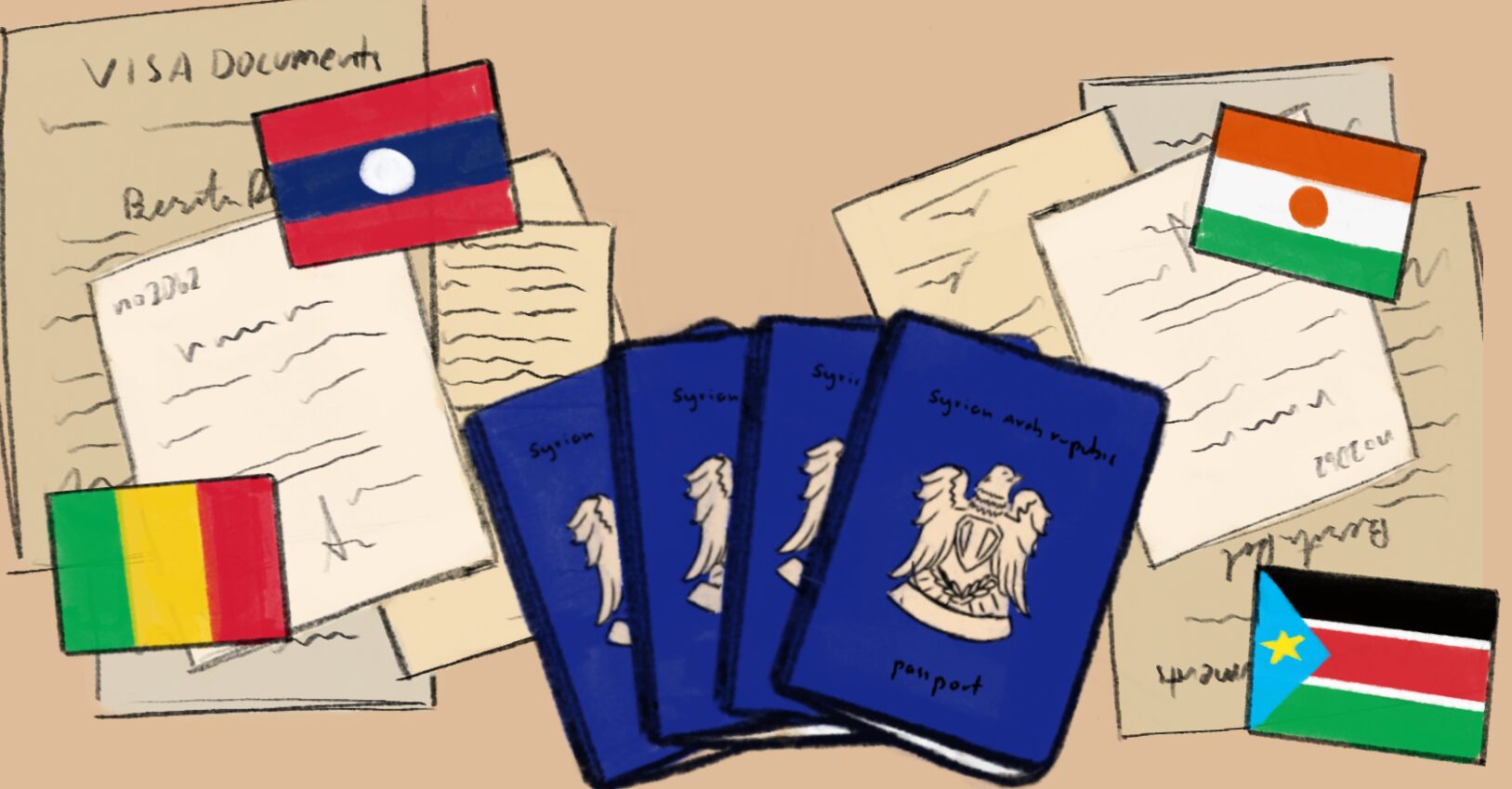
The Trump Administration has, in the last several months, continued to impose significant immigration and travel restrictions upon foreign nationals. President Trump’s overhaul of national security policies has been the subject of contentious debate throughout the country, sparking widespread discourse over the legitimacy and implications of the moves.
On June 4, 2025, Trump signed into effect an executive order outlining his first restrictive policies since returning to office. These include a “full” travel ban on 12 countries, entailing a sweeping prohibition of entry for nearly all nationals, and a “partial” travel ban on another seven countries, which restricts entry for specific categories. Burkina Faso, Laos, Mali, Niger, Sierra Leone, South Sudan and Syria are among the countries facing full restrictions, while Venezuela and Cuba have partial ones. Under the June executive order, the U.S. Citizenship and Immigration Services additionally enforced a blanket pause on the judgement of all immigrant benefits for nationals. The proclamation has no expiration date and will continue indefinitely.
There are exceptions to Trump’s initiatives: the June ban does not apply to an individual with a current American visa; athletes, coaches or families attending certain sporting events; immediate relatives of U.S. citizens; children adopted abroad; or Afghans seeking visas for their work in aiding U.S. armed forces.
This trend of travel restrictions has only continued and has since become more encompassing, with the Trump administration issuing another proclamation on Dec. 16. These expanded travel bans went into effect on Jan. 1, and restricted entry into the U.S. by nationals of 39 countries, as well as people with Palestinian travel documents.
Recent developments have prompted further changes affecting the green card process from the Department of Homeland Security (DHS), most notably after an Afghan national shot two National Guard members on Nov. 26, 2025. In December, the U.S. Citizenship and Immigration Services responded by releasing a statement that it would halt reviewing all processing applications for green cards, citizenship or asylum from immigrants from 19 countries, all of which were previously included in a travel ban. Past immigrants, from as far back as 2021, will also be reviewed.
Within the same month, the administration also implemented new restrictions on H1-B visas. The visa program enables employers to hire noncitizens with specialized skills or trades; previously largely unstructured, the program will now include a weighted system prioritizing individuals who would earn a higher pay. According to immigration attorney Rosanna Beradi, “the change will severely limit the number of applicants who qualify… [and] will make it even harder for international students to remain in the U.S. after graduation.”
Additionally, Trump is reportedly deploying 2,000 federal agents in Minneapolis as part of his tightening of immigration-related policies following the publicization of the 2022 welfare scandal associated with parts of its Somali community. The federal agents include those from Immigration and Customs Enforcement and the U.S. Border Patrol. The DHS has made over 1,000 arrests of “murderers, rapists, pedophiles, and gang members,” according to DHS Assistant Secretary Tricia McLaughlin.
The changes in travel and immigration policies, as a whole, come as a major system-wide shift that now prioritizes strict enforcement of immigration and border security. The redefinition and creation of new policies and initiatives have significantly affected workers, students and families alike, and this trajectory will seemingly continue in the foreseeable future.
Written by Nisha Khatri
Graphics by Sona Saravana
You may also like
-
166-million-year-old ‘Dinosaur Highway’ discovered in England
-
Photo Gallery: Walter Johnson High School Anti-ICE Walkout
-
A Campus Shaken: The December 13 Shooting at Brown University
-
Eight Decades Since the Beginning of the Denunciation of Crimes Against Humanity: The Nuremberg Trials
-
BookTok: The Social Media Phenomenon Revolutionizing the World of Literature